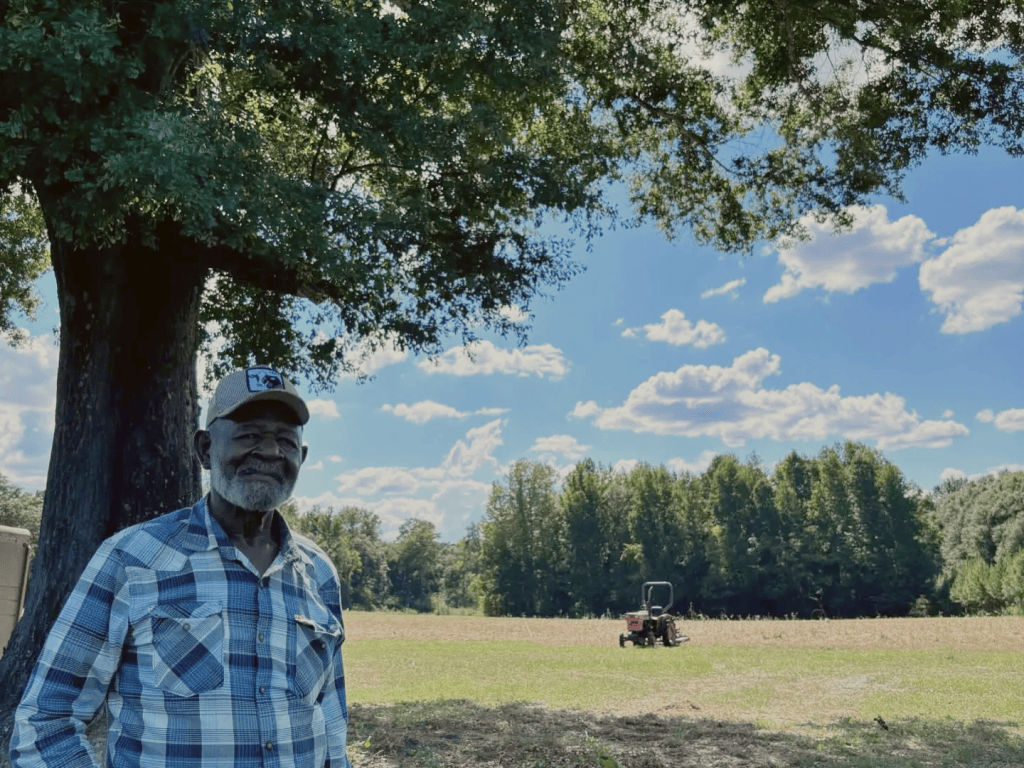
In Gallion, Alabama, an 87-year-old farmer and his family carry forward a story of sovereignty, soil, and survival
It is early in the planting season for Elister Charleston and his family. And, as he has come to know in his eighty years of farming, before the faithful sun breaks into the sky, before he gets himself cleaned up and dresses in his blue jeans, shirt and cap, before he makes his black coffee and has a little breakfast, before he heads to his farm and surveys the land, before he kneels down in the field and feels the dark gray sand between his weathered hands, he humbly asks The Lord to go through with me during the day, and help me know what to plant.
Then, careful not to stir the sleep of his wife, Hattie Mae, Elister, 87, gets in his pickup truck and drives to his farm, the Charleston Farm. One family, four generations of toiling, planting, harvesting, and expanding. Of praying through yields and losses, listening, and believing. Of family, faith, and love.
The planting season tends to run from early spring, after the Easter Snap when the soil warms and the danger of frost has passed, to early in the summer. One sunny and warm day in early April, Elister spent his day at the farm planting his seeds and bulbs. His second eldest son Edmond goes about the same business. His granddaughter, Edmond’s daughter, Janie, is another hand.
The 24.5-acre family farm is located in the community of Gallion, Alabama, nestled within the southern Black Belt, which holds layered significance. The region is a 300-mile crescent of dark, rich, highly fertile prairie soil that stretches across central Alabama and northeast Mississippi. In its past, thousands of enslaved African Americans cleared and worked its fields on colonized land, their brutal labor on cotton plantations fueling the local and state economy.
Farming has long been the foundation of the family, starting with Elister’s father and his son’s namesake, Edmond, who toiled as a sharecropper. After his father died, Elister bought some 46 years ago his first patch of farm land.
He and his family are conscious of their interdependence with the earth. They see the land as divine. They know farming is their purpose within generational love, generational sovereignty, and stewardship over the soil. In that, the farm is their peace, pride, and joy. They plant and grow bounties of fresh produce such as collard greens, tomatoes, sweet potatoes, watermelon, squash — food that is organic, homegrown, nurtured, prayed over, and loved. The farm is also a community haven. The family hosts community health programs, and this summer is offering field tours and lessons, including storytime under the oak tree with Elister, affectionately known to many as Granddaddy. The farm is part of the Black story in oneness with the land, and what land ownership and food sovereignty means through time and in time. Despite what all goes on in the material world, the farm not only survives – but thrives – through faith.

